Posts

CAR-T vs CAR-NK Cell: The Cancer Cell Therapy Showdown (2026)
Image
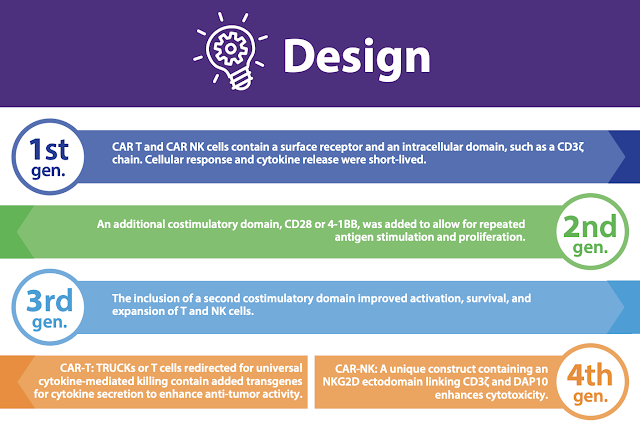
One of the most promising approaches in cellular therapies is immunotherapies using engineered T cells or natural killer (NK) cells expressing chimeric antigen receptors (CARs). Will CAR-NK cell therapies overshadow traditional CAR-T options for the treatment of some cancers?   Recently researchers have tried to modify natural killer (NK) cells with chimeric antigen receptors (CAR) to increase potential to bind and destroy cancer cells, known as NK cell therapy. Here we describe the differences between CAR T cell therapies and CAR NK cell therapies to consider when developing cancer treatments for patients. What is CAR-T? T cells are part of the adaptive immune system and are intended to generate a long lasting protective immune response. By engineering T cells with the Natural Killer Group 2D (NKG2D) receptor, they become NKG2D CAR T cell therapies. What is CAR-NK?  NK cells are a part of the innate immune system and are the first line of defense against foreign infections a...

Berberine and Natural GLP-1 Mimetics as Drug Alternatives (2026)

Image
Introduction Prescription GLP-1 agonists like Ozempic and Mounjaro have revolutionized weight management and type 2 diabetes care. However, not everyone has access to these medications, and some prefer natural alternatives. Emerging research highlights berberine and certain natural GLP-1 mimetics as potential adjuncts or alternatives. These compounds may support blood sugar control, improve insulin sensitivity, and modestly aid natural weight loss — all through mechanisms similar to GLP-1 drugs. What Is Berberine? Berberine is a plant-based alkaloid found in barberry, goldenseal, Oregon grape, and other herbs . Mechanisms of Action: Activates AMPK , the body’s “metabolic master switch,” improving glucose uptake. Enhances insulin sensitivity . May increase GLP-1 secretion , helping regulate appetite and blood sugar. Clinical Evidence: Studies suggest berberine can reduce fasting blood sugar by 20–30 mg/dL . Modest weight loss of 5–7% over 12 weeks has been observed. Well-tolerated, w...

Linoleic Acid vs Oleic Acid: What's the Difference?

Image
What is Linoleic Acid? Linoleic acid, whose name is derived from the Greek words "linon," which means "flax," and "oleic," which means "produced from oil," is an unsaturated fat. Unsaturated fats are essential for encouraging cell regeneration and keeping skin smooth, elastic, and young-looking. Linoleic acid can be used on all skin types, but those with dry or acne-prone skin may find it most beneficial. Acne patients have been demonstrated to have reduced linoleic acid levels in their skin surface lipids. What is Oleic Acid? Oleic acid is a mono-unsaturated omega-9 fatty acid found in various animal and vegetable sources. Oleic acid is considered to be highly stable to oxidation and also can enhance the activity of antioxidants and antipolymerization agents. ( Source ) Difference Between Oleic Acid and Linoleic Acid Linoleic Acid Vs Oleic Acid for Skin Your ability to choose between the fatty acids will depend on your skin type. Linoleic acid-r...

Eating More Foods with Vitamin C Can Support Skin Thickness and Collagen Production — What the Science Really Says

Image
New research suggests that getting enough vitamin C from foods may help support skin health by increasing collagen production and improving skin structure. While beauty brands invest billions in anti-aging creams, researchers in New Zealand have found something far simpler: Eating foods with vitamin C could boost the antiaging benefits your skin needs. ( ScienceDaily )  People who ate two kiwifruits daily—the equivalent of 250 micrograms of vitamin C—had thicker skin and accelerated skin regeneration after eight weeks. The discovery, from New Zealand’s University of Otago, reveals that vitamin C absorbed through the bloodstream travels into all layers of the skin, promoting thickness, regeneration, and a more youthful complexion. What the Study Found A 2025 published study in the Journal of Investigative Dermatology investigated how dietary vitamin C affects human skin: ( ScienceDaily ) Dietary intake increases skin levels: Vitamin C consumed through food enters the bloodstream a...

NAD+ Supplements (NR, NMN) and Cancer (2026): Resource Guide

Image
Do NAD+ supplements   Nicotinamide Riboside  “NR” ( FAQs ) ( Anecdotes ) and NMN ( FAQs and Anecdotes ) promote cancer growth? Well, despite their various disagreements, this is one issue NAD+ experts   Dr. David Sinclair   and   Dr. Charles Brenner   appear to agree on in regards to their favorite NAD+ boosting supplements: PhD Scientists / NAD+ Experts: Dr. David Sinclair on NMN: Does NMN Stimulate Cancer Growth? Dr. Charles Brenner on NR: What are Pre-Clinical Studies Saying about Nicotinamide Riboside (NR) and its Impact on Cancer? “We Think that Higher NAD Status is Really Important for Prevention of Cancer” Medical Doctors: Dr. Hoffman M.D. on NR: “I’m Going to Keep Taking it, Keep Recommending it” Why He Recommends NR to Patients “I Take NR. I Don’t Think It’s Going to Give Me Cancer”  (11/2021) Clinical Trials for NR and Cancer: The Effect of Exercise and Nicotinamide Riboside Muscle Health and Insulin Resistance in Survivors of Child...

GLP-1 Agonists vs Triple Agonists: Which Weight Loss Therapy Is Right for You? (2026)

Image
Introduction In the world of weight management, medication options have evolved rapidly. GLP-1 agonists, like Ozempic and Wegovy , became household names for their ability to help people lose weight while managing blood sugar. But now, GLP-1/GIP/Glicentin triple agonists , such as Mounjaro (Tirzepatide) , are gaining attention for potentially offering even greater weight loss results. If you’re considering prescription weight loss therapies, understanding the differences between these drugs is key to making an informed decision. This article breaks down the science, benefits, side effects, and practical considerations for both options. What Are GLP-1 Agonists? GLP-1 (glucagon-like peptide-1) agonists are medications that mimic a naturally occurring hormone in your gut. They help regulate appetite, slow stomach emptying, and improve insulin response. Credit: GoodRx Health Common GLP-1 drugs include: Ozempic (injectable, weekly) Wegovy (higher-dose version of semaglutide, weekly injec...

Next-Generation GLP-1 Agonists and Triple Agonists for Weight Loss (2026 Update)

Image
1. Background: From GLP-1 to Multi-Agonists GLP-1 receptor agonists (GLP-1 RAs) dramatically changed obesity care by reducing appetite, slowing gastric emptying, and improving glucose metabolism. Semaglutide (Wegovy/Ozempic) and liraglutide established the first wave of effective, widely used drugs. Dual agonists (e.g., tirzepatide: GLP-1 + GIP) improved on those results, adding metabolic benefits via the glucose-dependent insulinotropic polypeptide (GIP) pathway and yielding higher average weight loss. Now, multi-agonists — combining GLP-1 with additional receptors (GIP, glucagon, amylin) — aim to enhance weight loss further by synergistically increasing energy expenditure and reducing appetite beyond what single-target drugs achieve. ( Endocrine Society ) Credit: GoodRx Health 2. Next-Generation GLP-1-Based Therapies ✅ Oral GLP-1 Agonists Recent advances include oral small-molecule GLP-1 agonists , which could significantly expand access and adherence: Orforglipron — an oral GLP-...

Labels

Show more

Archive

Show more